Sports
CCS Success—Size Matters, But Not How You'd Think
Second of two-part series examines how Notre Dame- Belmont and Soquel benefit from enrollment shifts and drop to Div. IV, Santa Cruz may have missed its chance.

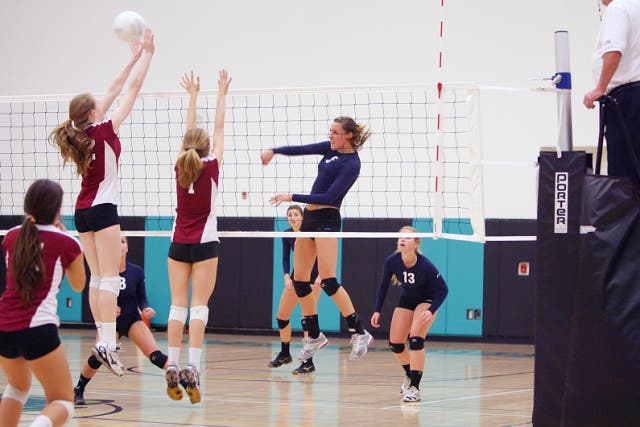


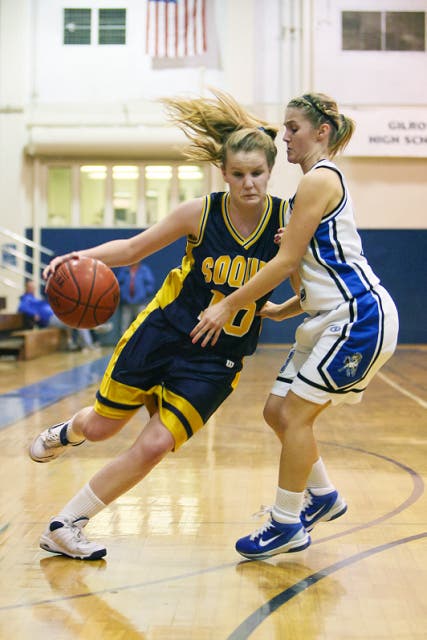

In the Central Coast Section, the playoff fields in some high school sports – notably boys and girls basketball and girls volleyball -- are determined exclusively by school enrollment. The perennial powerhouses reside in Divisions II and III – the home of mid-sized schools – which makes those brackets inherently the most difficult.
Some very successful programs have the misfortune of continuously being placed in those loaded divisions alongside the West Catholic Athletic League heavyweights simply because their school size keeps them squarely within the parameters of Divisions II and III. The Burlingame High boys basketball team, for example, has lost in the CCS Division III title game six times since 2003, five to a WCAL opponent. Burlingame, annually a mid-sized Division III program, recently in the final for the third straight year.
Meanwhile, other traditionally strong schools have experienced some recent good fortune after extended frustrations in the mid-sized divisions by suddenly growing too big for Division II or too small for Division III. Moreover, those programs have capitalized on the slight shift in their relative school size by recording historic seasons in multiple sports after escaping the power divisions.
Find out what's happening in Los Altoswith free, real-time updates from Patch.
Last week, in , we examined how Palo Alto has made the most of its beneficial bump to Division I through the 2010-11 fall and winter seasons, and how Gunn is a solid candidate to follow suit in the coming years.
Today, we’ll address how Notre Dame-Belmont has put its Division III difficulties in the rear-view mirror with an outstanding year in Division IV. Soquel appears to be in the same favorable position, but it will need to do a better job of taking advantage than rival Santa Cruz, which may well have seen its great window of opportunity in Division IV close – at least for now.
Find out what's happening in Los Altoswith free, real-time updates from Patch.
_____________________________________________________
Bigger isn’t always better.
Take Notre Dame-Belmont. Despite enduring a 2-10, last-place finish in the West Catholic Athletic League this year, a sense of optimism surrounded the Notre Dame basketball team throughout the season. The Tigers knew that they were ticketed for Division IV in the Central Coast Section playoffs, and that represented both a big shift and a big opportunity.
Notre Dame had been a fixture in Division III since it won that bracket in 1999, but had to settle for seven semifinal appearances in that span, including each of the previous four seasons. After taking their licks in the WCAL in the regular season, the Tigers would then invariably have their CCS run cut short by one of their league foes – often by an unseemly margin.
But this year, there was a light at the end of the tunnel – a chance to be the CCS bully for a change. Notre Dame, the smallest WCAL program, persevered after the hard lessons it received in league play by streaking to – and first in 12 years.
The Tigers, who were the second largest in their 16-school CCS field -- single-sex schools’ populations are doubled in California Basic Educational Data System (CBEDS) enrollments -- then made program history by claiming with a second-round blowout.
Clearly, such exploits would have been implausible in Division III.
In girls volleyball, Notre Dame also seized its newfound opportunity last fall. As the largest school of the 12 Division IV entrants, the Tigers produced perhaps the best overall postseason run in program history. Notre Dame advanced to a CCS title match for just the second time in 13 years, , and then enjoyed .
Playing in Division III each of the previous 10 years in which they qualified for the CCS volleyball playoffs since their title in 1997, the Tigers had advanced beyond the quarterfinals just three times.
Fortunately for Notre Dame, the school’s placement in Division IV in the five-division sports seems assured for at least the immediate future. Notre Dame’s reduction in size – from 1092 students (again, that number is double the actual school population) in the 2009-10 CBEDS to 1000 in the 2010-11 CBEDS means that three schools (San Jose, Soquel and Harbor) suddenly boast a larger enrollment. So instead of teetering on the edge of the Division III/IV divide, the Tigers have now been pushed a bit deeper into the Division IV field.
Not surprisingly, Notre Dame athletic director Jason Levine feels his program is in an enviable position – it benefits from the prestige and competitiveness of playing in the WCAL and then it has a much greater opportunity for extended postseason runs in Division IV.
“(Perspective students and parents) will know we’ll be in the WCAL – we play one of the toughest schedules in Northern California, if not all of California,” he said. “Once you get to (the CCS and NorCal playoffs), you’ve played the toughest competition you could’ve played and then that bodes well once you face teams that haven’t played that level of competition.”
______________________________________________________
The other school that seems to be well-positioned to reap the rewards of dropping to Division IV is Soquel.
Soquel has enjoyed an extended strong run girls basketball – but has invariably gotten tripped up by an elite program in the playoffs. Before this year, the Knights had played in Division III the previous seven years, advancing to the title game twice and the semifinals two other times. But Soquel was eliminated by a WCAL program in six of those seven years, including four times by the eventual champion.
As fate would have it, Soquel’s drop to Division IV this year coincided with Notre Dame’s, and sure enough in the semifinals.
But Soquel’s history suggests that if the Knights continue to compete in Division IV – a much-less challenging field -- success should follow. Soquel was the third-largest school in its girls basketball bracket this year, and the CBEDS indicate it will be in essentially the same position next year.
Soquel’s girls volleyball team hasn’t enjoyed the same long run of success. But the Knights did earn the No. 1 seed in Division IV last fall, ultimately falling in to eventual CCS and NorCal champion Sacred Heart Prep. And with the entire team set to return from last year’s 27-win unit, Soquel’s window of opportunity is still wide open.
Nevertheless, with so many variables factoring into a school’s divisional placement – how its enrollment and that of other similarly-sized schools change from year to year, how the CCS apportions playoff berths within the divisions, whether any new schools have joined the section, etc. – it’s never smart for a school near a divisional divide to count on heading to a particular bracket.
The opportunity to play in a favorable division may be fleeting – which the Santa Cruz boys basketball team may find out the hard way.
Santa Cruz has been an elite Division IV program the last two years – both times in great battles. But after a five-year run in Division IV, the CBEDS suggest the Cardinals may well be ticketed for the extremely tough Division III field next year.
Santa Cruz – which was the largest in the 16-school 2011 Division IV bracket in boys basketball – already played in Division III in girls basketball and girls volleyball this year. And Santa Cruz has ascended one slot in the 2010-11 CBEDS. This means a placement in Division IV will be even less likely in a five-division sport next year.
After narrowly missing a CCS boys basketball title in Division IV the last two years, Santa Cruz likely has seen a golden opportunity fall by the wayside. Division III is a whole different ballgame.
But the Cardinals shouldn’t expect any sympathy from Burlingame.
Get more local news delivered straight to your inbox. Sign up for free Patch newsletters and alerts.
