Health & Fitness
Gratitude Key to Himalayan Healthcare
Even at 18,000 feet – and at sub-freezing temperatures – gratitude proves to been an effective approach to healthcare.

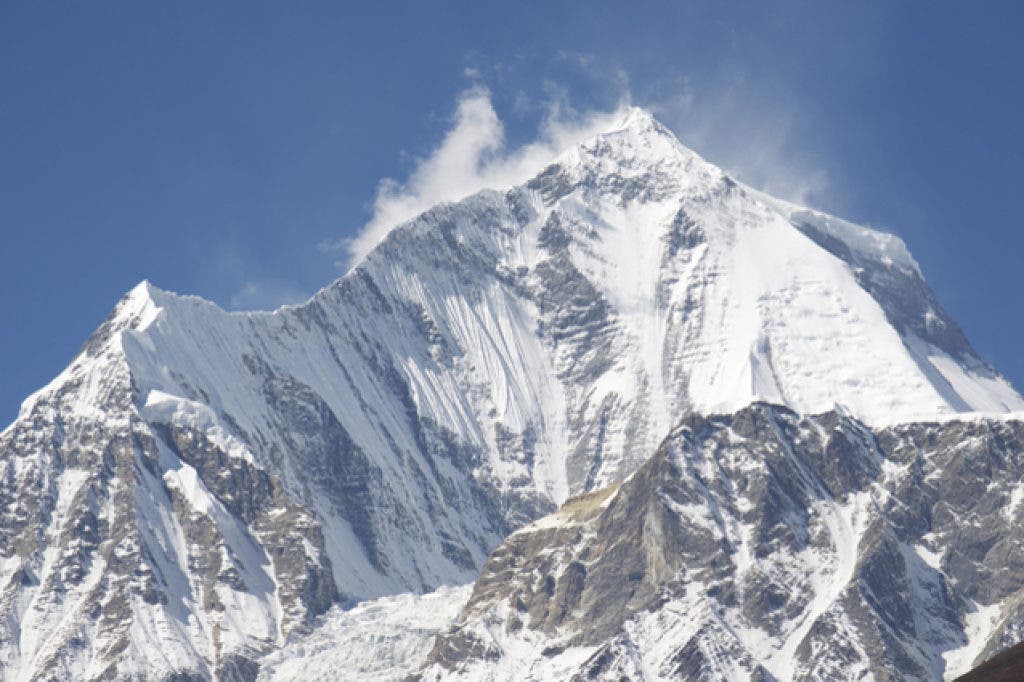
As far as I know, my wife and I had already purchased our tickets to Nepal before grasping entirely what we’d committed to: an 18-day trek through the Himalayas including an ascent up Thorung La – at 5416 meters (17,769 feet), one of the world’s highest mountain passes.
Sure, we had experience hiking to the top of some pretty big hills. But even our one-day trot to the top of California’s Mt. Whitney – the tallest peak in the Lower 48 – couldn’t compare to what was in store for us.
Find out what's happening in Los Altoswith free, real-time updates from Patch.
The first few days of the trek were just about as carefree as they come as our small group of adventurers (7 clients, 7 porters, and 2 guides) slowly but surely made our way through the balmy jungles, alpine forests, and hillside rice paddies of the Marsyangdi River valley. However, the closer we came to Thorung La, the more aware I was of the potential health risks involved with high altitude trekking.
I’m sure this had less to do with my physical environment than it did the surrounding mental atmosphere – an atmosphere clouded by the concerns of so many others traveling in this region who, like me, were finding themselves in a situation practically guaranteed to push us, willingly or not, beyond our presumed limits.
Find out what's happening in Los Altoswith free, real-time updates from Patch.
Mind you, this wasn’t because of any fear mongering on the part of our Nepali guides and porters. In fact, it was quite the opposite. Rarely have I found myself surrounded by such supportive individuals whose constant and sincere expectation of good provided a much-needed – and much-appreciated – boost of energy. Not once did I hear any of them express even the slightest doubt about our collective ability to make it over the pass.
Nevertheless, in the days leading up to our big climb I began to experience some mild symptoms of altitude sickness.
By the time D-day arrived (morning temperature: between 0 and 10 degrees Fahrenheit) I was feeling considerable pain in my lower neck, although nothing serious enough to warrant postponing our departure. However, I did take some time to consciously let go of any fears I’d been harboring about the day ahead, a process made much easier thanks to a conversation I had with my wife.
We discovered that the night before we’d both been thinking specifically about the things we appreciated about each member of our little climbing clan; qualities of thought, unique talents, and so on. And then it hit me: I realized that it wasn’t just the expectation of good but also the conscious gratitude for the good we’d already experienced that was making me feel a lot better. In fact, well before we reached the summit, I felt absolutely no pain and was walking at a surprisingly quick pace.
I suppose there are lots of ways to explain my recovery. Some might call it positive thinking or just plain luck. As I see it, though, it was the natural result of prayer, a word that describes – at least in this instance – a conscious effort to identify myself and others with the physically transformative presence of God-given good.
For me, prayer isn’t so much an appeal to God to do something out of the ordinary (“Please make me feel better despite this crazy situation I’ve gotten myself into!”) but the recognition of what God has already done and continues to do for all of us.
Not only has this kind of gratitude-based approach to healthcare proven to improve our outlook but our bodies as well – in a variety of ways and, apparently, at all elevations.
Eric Nelson is a Los Altos resident. His articles on the link between consciousness and health appear regularly in a number of local, regional, and national online publications, including The Washington Times. He also serves as the media and legislative spokesperson for Christian Science in Northern California. This article published with permission by Communities @WashingtonTimes.com.
