Health & Fitness
Abroad in Seville: Characters I've Encountered
During the first couple weeks in Seville, Spain, I was approached with generosity and sincerity by Sevillanos.

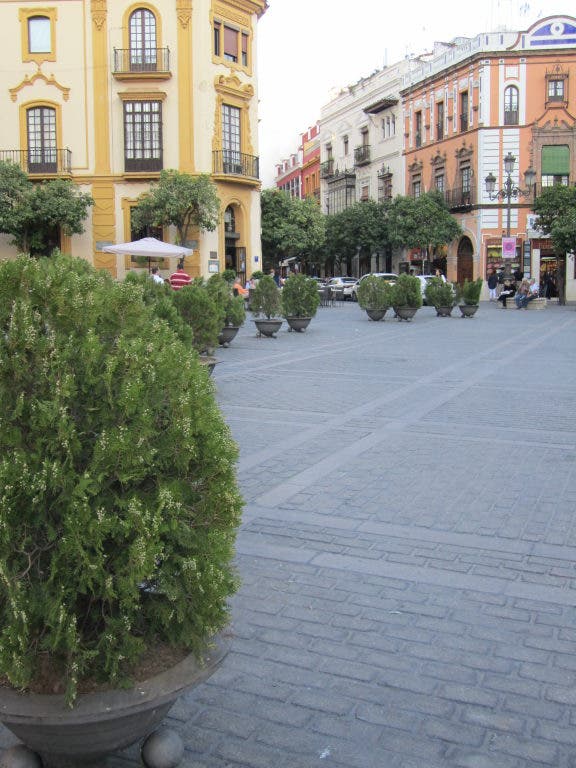


As a new person in a foreign city, I knew I was bound to meet people from the area and have quite a few interesting interactions with them. People that you bump into on the street or who give you a helping hand always make an ordinary experience a memory to last forever.
My first weekend in Seville, Spain, several friends and I went out to explore the nightlife. That night I met two interesting characters. The first, who looked to be about 35 years old, was from Brazil but was with his girlfriend, a Seville resident.
At the start of our conversation he was speaking to me in Spanish, but once I told him I was an American studying abroad and had only been in Seville for three days, he switched to English immediately. While he spoke to me in English, I continued to speak in Spanish.
Find out what's happening in Los Altoswith free, real-time updates from Patch.
Our conversation involved typical introductory information, like what we were both doing in the area. After I told him that Spanish was my second major and that I’d been learning the language for about eight years, I asked if he would speak to me in Spanish since I was trying to improve my navigation of the language. One of the best ways to do so is by conversing.
I was grateful he switched back to Spanish, however my level of comprehension of what he was saying went from conversational to way over my head. Brooke, a friend and fellow traveler, and I exchanged glances acknowledging that neither of us could follow what his fast-moving lips were saying and therefore couldn’t contribute to the conversation; rather we just nodded and responded with a cheerful “Si.” Nonetheless, he loved our eagerness to use our Spanish.
Find out what's happening in Los Altoswith free, real-time updates from Patch.
The second character I encountered was a guy from Morocco named Isham. He had been studying in Seville for four years and since coming to Seville from Morocco hadn’t returned home. If he returned home, he didn’t know if he would be allowed to return to Spain since the immigration restrictions were quite tricky.
While Spanish wasn’t his native tongue, he spoke with such ease and fluidity that I jealous of his ability to navigate the language. It proved to me just how valuable an immersion experience like studying abroad is for learning a new language.
At this point I wouldn't say I'm learning a new language but rather am learning to apply and truly become comfortable with a language that I have been studying for many years. The only way to get better is to continue practicing with new characters!
Those were two of my nighttime encounters. However, I’ve also had several daylight encounters, courtesy of my biking troubles.
Before the start of my classes and normal routine, I decided it would be a good idea to figure out my transportation so I didn’t have the stress of getting to class on time while being unfamiliar with transportation in a foreign land.
In Seville, there’s a bike rental system called Sevici. I paid 25 Euros for my four months. Thanks to Sevici, I could take a bike out from various locations across the city. I could use the bike for 30 minutes at one time before being charged for the extra time. Now that I've used Sevici I can say it's a great economic and environmental idea that should be implemented in cities across the United States.
While I hold high views of Sevici now, I wasn't always so fond of it. The first day I decided to take a bike out for a test run I faced a stressful situation, alleviated by a kind passerby.
When I signed up for Sevici, the company mailed me a card. That card was my pass to get a bike whenever I wanted one. Before getting the card, I had observed what other people did when they went to take a bike. When it was my turn, I thought I'd have somewhat of a clue what to do.
An electronic kiosk stand sat at every Sevici bike stop. It's here you selected which bike you wanted. The company also registered which bike you were taking in your account. I entered the PIN number I'd created during registration, after agreeing to the terms of use. So far, so good.
Then I got to the step where you select the bike you want and the bike is--supposed to--release from its stand. I selected a bike number and was alerted that I had 60 seconds to get the bike, otherwise it would lock again. I approached the bike, grabbed the seat and pulled backwards, in the direction the holster had an opening. The bike wouldn’t give.
After 60 seconds of trying to pull the bike off, it was an epic failure. My time was up. I reapproached the electronic kiosk to give it another try; maybe another bike would be better luck? I went through the steps again and selected another bike. This one wouldn't budge either! What was I to do? People passing by had already given me odd looks, but at this point I didn’t really care. I knew they knew I had no idea what I was doing and that I probably wasn’t from around here. What did it matter?
As I was nearing the end of my second 60-second window to release the bike, a couple passed by me and then turned around toward me. T
The man asked, “Necesita ayuda?”, or “Do you need help?” Anxious for success with getting a bike, something that all the Sevillanos made look so easy and yet I was having such a difficult time with, I told him I was having trouble and asked if he knew how to get the bike out.
After stumbling on some words and hesitating as I searched for the proper vocabulary, he switched to English and asked if I spoke English. I responded, "Yes." After establishing that I was studying abroad from the states and had only been in Seville for three days, I found out he was from Britain but had been living in Seville for some years. His girlfriend, a native Sevillano, told him to help me and show me how to get the bike out so that I could do it on my own next time. I approached the electronic kiosk for the third time, selected a bike and watched as he demonstrated how to release the bike, making it look so easy. He told me how I would have to put it back when I returned it. As I rode off, I was very thankful to have had such a gracious stranger (who happened to speak English, which in this case was crucial!) willing to help me.
When I arrived at the next Sevici station, located at Gran Plaza, about a three minute-bike ride or six minute walk, I got off the bike and nudged it into the holster.
Once again, it just wouldn’t budge. I tried and I tried to get the piece that entered the holster to line up and smoothly glide in. No luck. But, fear not, because before I knew it the British guy and his Sevillano girlfriend were walking toward me.
When I saw them, I knew it'd be OK and that they would stop to help me again. Immediately when he approached, I didn’t even have to say that I was having trouble because he could tell. He showed me how you have to pull the back wheel of the bike at a 45-degree angle to the mount that the holster sits in because some of them are much more worn than others.
An experience that was meant to be easy and breezy turned into a fiasco, but a fiasco that resulted in my discovery of the sincere, gracious spirits of Sevillanos.
A student at Lehigh University, I studied abroad in Seville, Spain, during the spring semester of 2012. I posted about my adventures and cultural experiences at SenseSeville.
Next time, I'll discuss my experience with transportation.
Get more local news delivered straight to your inbox. Sign up for free Patch newsletters and alerts.
