Business & Tech
Genetic Event Spurs Residents to Test Their DNA
An event in Los Altos this week allowed individuals to learn about their genetic makeup.
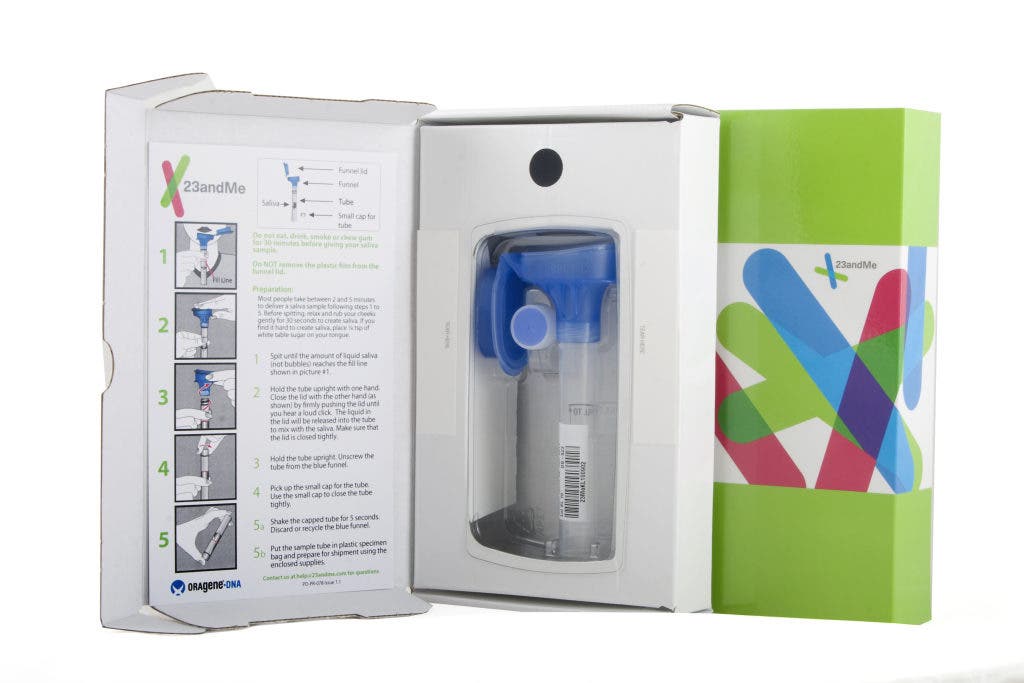


When Karen Fox spat in a tube to get her DNA tested, she discovered a whole new world of genetics, particularly her personal genome.
After her DNA was tested, Fox started tracing her ancestry and even found a relative from a whole slew of information that she received from 23andMe, a retail DNA testing service that enables people to learn and explore their ancestry, genealogy, health and inherited traits.
Interested in local real estate?Subscribe to Patch's new newsletter to be the first to know about open houses, new listings and more.
Fox, who lives in Mountain View, was among other curious Los Altos and Mountain View residents for 23andMe’s genetic event this week, hosted by a family cafe in Los Altos. Residents were able to purchase a kit, submit a saliva sample and explore online tools from 23andMe.
The Mountain-View based start-up is among a few that have emerged in the retail genomics space. As the biotechnology and health care industries expand rapidly, customers are able to understand their genes or personal genome through DNA testing services, such as 23andMe, which was named after 23 pairs of chromosomes.
Interested in local real estate?Subscribe to Patch's new newsletter to be the first to know about open houses, new listings and more.
“A lot of people don’t know exactly why they want their genome and why you want to access your DNA,” said Los Altos Hills resident Anne Wojcicki, CEO and co-founder of 23andMe. “It’s another way of looking at yourself and for us, it’s been one of the exciting aspects of teaching people and building and developing a market.”
After years in health care investing, Wojciki, a graduate of in Palo Alto, started the company in 2006 with Linda Avey. Wojciki said she felt that the health care industry was not structured or set up with the health care she wanted.
She envisions individuals empowered by their access to data that can enable them to think about how they can prevent diseases. One individual, in particular, has become more enlightened: Wojciki’s husband, co-founder Sergey Brin, who discovered he has a gene mutation that make him high risk for Parkinson’s disease.
Brin’s company is one of the initial investors in 23andMe along with others that include Johnson & Johnson, Genetech, New Enterprise Associates, MPM Capital, among others.
“We’re moving away from the era where we’re going to the doctor and relied on the doctor with all your information,” Wojcicki said.
With a team of scientists and engineers on hand, 23andMe has provided more than 125,000 genotyped customers insights into their own genetic makeup.
First, customers purchase a kit for $99, a price that has dropped significantly from about $1,000 in 2007. They also subscribe to the service for $9 per month. The kit includes a tube to capture saliva. Customers send the tube to a lab, where DNA is analyzed. In several weeks, they receive information about their DNA, and are able to start discovering the origins and migrations of their ancestors around the globe.
Customers can also learn about interesting inherited traits, such as eye color, motion sickness, migraines, hair curl, lactose intolerance, male pattern baldness and even, odor detection of asparagus in urine.
They can also be more informed about inherited conditions, risks for diseases and drug responses. For example, they can see if they are susceptible to diabetes, cancer, Alzheimer’s, coronary heart disease, among others.
Customers can then take their information and take preventative steps to change their lifestyle and habits. They can participate in discussion groups with other members as well as experts. In addition, they can become part of research and receive latest medical findings.
“You feel like you’re empowering people with knowledge about themselves, giving them the option to contribute to research,” said Deborah Pascoe, Director of Operations of 23andMe. “That information winds back to helping people.”
Fox, who found her relative and connected with him through 23andMe, is essentially among the early adopters of personal genetics. She sees it as going beyond finding a relative, but rather digging in deeper.
“I’m intrigued by the web of life that reveals how interrelated we are and we don’t even know it,” Fox said. “If we all treated each other as though we were related, the world would be a better place.”
