Community Corner
When is Daylight Saving Time 2013?
Get ready to move your clocks forward, Los Altos. Find out when to make the switch—and why we do it.

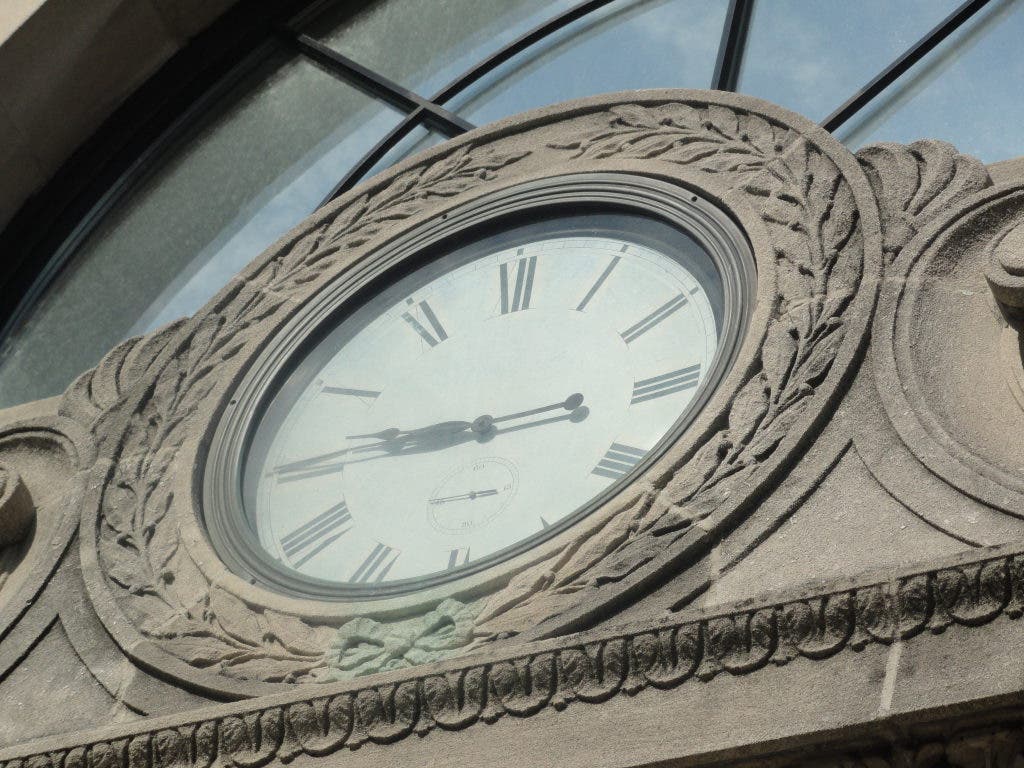
Daylight Saving starts early this year, so be prepared to get up earlier Sunday morning.
You’ll want to think about going to bed early or sleeping in next weekend: Daylight Saving Time starts at 2 a.m. Sunday, March 10. That means you’ll “spring ahead” and move your clocks forward one hour—and, unfortunately, lose that hour of sleep.
Find out what's happening in Los Altoswith free, real-time updates from Patch.
The benefit is that we’ll get more sunlight later in the evening and it’s a pleasant sign that spring is just around the corner. (Spring 2013 officially starts on Wed., March 20.)
Many electronic devices, like your cell phone and computer, automatically adjust when Daylight Savings Time begins or ends.
Find out what's happening in Los Altoswith free, real-time updates from Patch.
So, why do we do this at 2 a.m., and why shift our clocks at all?
According to Webhibit:
In the United States, 2 a.m. was originally chosen as the changeover time because it was practical and minimized disruption. Most people were at home and this was the time when the fewest trains were running. It is late enough to minimally affect bars and restaurants, and it prevents the day from switching to yesterday, which would be confusing. It is early enough that the entire continental U.S. switches by daybreak, and the changeover occurs before most early shift workers and early churchgoers are affected.
The larger reason for shifting our clocks, however, is energy conservation.
Benjamin Franklin first suggested shifting the clocks to save on candles, according to Discovery, but no one took him up on his idea at the time.
The first official national time shift wasn’t until 1918. Then the United States stopped the practice, started again during World War II for energy conservation reasons, stopped when the war was over and re-started with the Uniform Time Act in 1966.
Why does it start so darn early these days? Yep, we've been doing this since 2007 and we still can't get used to it. You can thank Congress for putting it in the Energy Policy Act of 2005, that lengthened daylight saving to eight months instead of six months. An entertaining perspective on that move from the New Republic here.
Does Daylight Saving actually save energy?
Discovery News reported:
Although a U.S. Department of Transportation study in the 1970s found that daylight saving trimmed electricity usage by about 1 percent, later studies have shown that the savings is offset by air conditioners running in warmer climates.
It may not all be for naught, however. Another study, performed in 2007 by the RAND Corporation found that the increase in daylight in spring led to a roughly 10 percent drop in vehicular crashes.
Check Your Smoke Detectors!
When you change your clocks in the fall and spring because of Daylight Saving Time, it’s also a good time to change batteries in your smoke and carbon monoxide detectors, and check to make sure the devices are in working order.
Arizona, Puerto Rico, Hawaii, U.S. Virgin Islands and American Samoa do not observe Daylight Savings Time.
Follow us on Twitter | Like us on Facebook | Sign up for our daily newsletter
Post an event on the calendar | Announce it to the world | Share photos
Get more local news delivered straight to your inbox. Sign up for free Patch newsletters and alerts.
